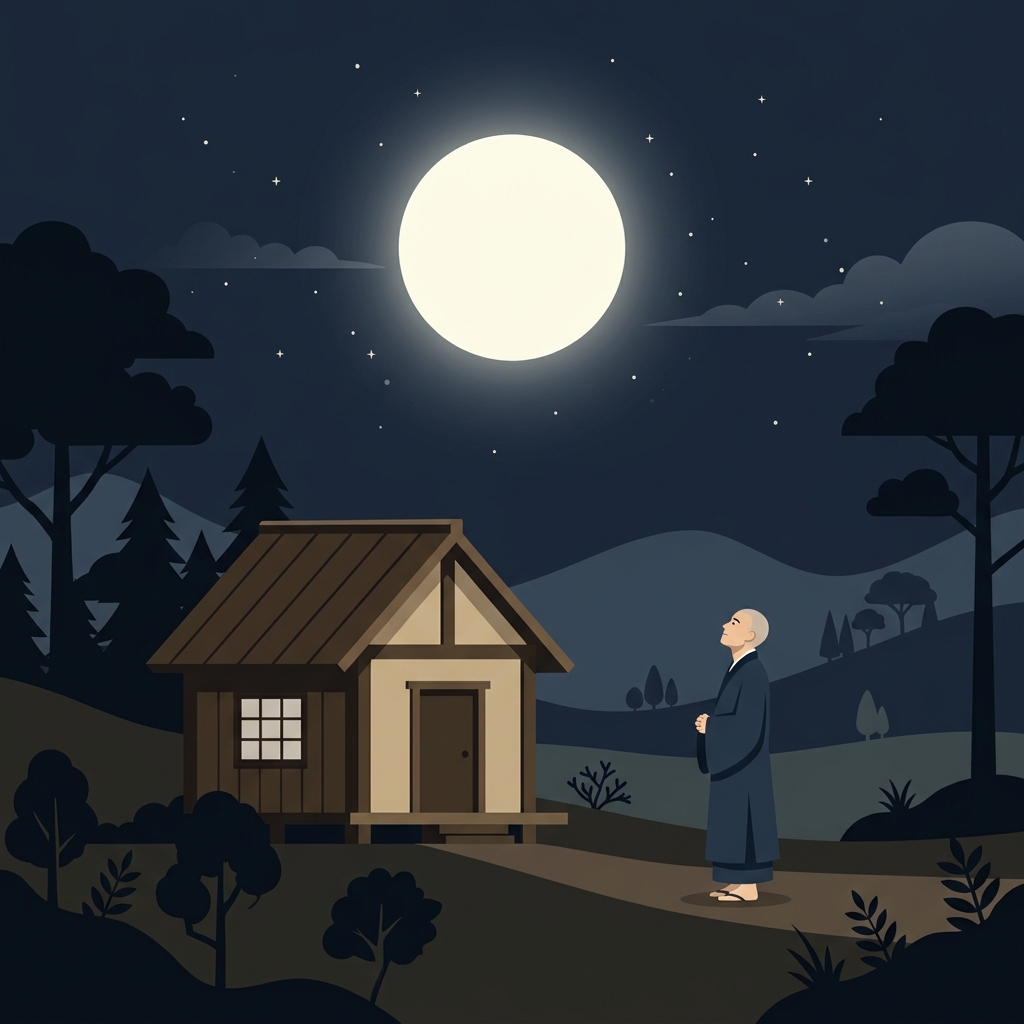
Ryokan, a Zen master, lived the simplest kind of life in a little hut at the foot of a mountain. One evening a thief visited the hut only to discover there was nothing in it to steal.
Ryokan returned and caught him. “You may have come a long way to visit me,” he told the prowler, “and you should not return empty-handed. Please take my clothes as a gift.”
The thief was bewildered. He took the clothes and slunk away.
Ryokan sat naked, watching the moon. “Poor fellow,” he mused, “I wish I could give him this beautiful moon.”
The Meaning
This short koan perfectly captures the essence of Zen and non-attachment. The thief was looking for material wealth and left with a set of old clothes, believing he had stolen something of value.
Ryokan, left with nothing but his nakedness, possessed the entire universe. He recognized that true wealth lies in the appreciation of the present moment—the light of the moon, the stillness of the night. These are treasures that can never be stolen, yet they are often overlooked by those constantly seeking material gain.
नेपाली अनुवाद
एक जेन गुरु र्योकान, पहाडको फेदीमा रहेको सानो छाप्रोमा सबैभन्दा साधारण जीवन बिताउँथे। एक साँझ एउटा चोर त्यो छाप्रोमा आयो तर उसले त्यहाँ चोर्नको लागि केही पनि पाएन।
र्योकान फर्केर आए र उसलाई समाते। “तपाईं मलाई भेट्न धेरै टाढाबाट आउनुभएको हुन सक्छ,” उनले त्यो चोरलाई भने, “र तपाईं खाली हात फर्कनु हुँदैन। कृपया मेरो लुगा उपहारको रूपमा लिनुहोस्।”
चोर अलमलमा पर्यो। उसले लुगा लियो र चुपचाप त्यहाँबाट गयो।
र्योकान नांगै बसेर चन्द्रमा हेरिरहे। “बिचरा,” उनले सोचे, “म उसलाई यो सुन्दर चन्द्रमा दिन सकेको भए कति राम्रो हुन्थ्यो।”
अर्थ
यो छोटो कोआनले जेन र अनासक्तिको सारलाई पूर्ण रूपमा समेटेको छ। त्यो चोर भौतिक सम्पत्ति खोजिरहेको थियो र मूल्यवान् कुरा चोरेको छु भन्ने विश्वास गर्दै पुराना लुगाहरू लिएर गयो।
र्योकान, जोसँग आफ्नो नग्नताबाहेक केही बाँकी थिएन, उनीसँग सम्पूर्ण ब्रह्माण्ड थियो। उनले बुझेका थिए कि साँचो धन वर्तमान क्षणको प्रशंसामा निहित छ—चन्द्रमाको उज्यालो, रातको शान्ति। यी त्यस्ता खजाना हुन् जुन कहिल्यै चोर्न सकिँदैन, तैपनि भौतिक लाभ खोज्नेहरूले अक्सर यसलाई बेवास्ता गर्छन्।