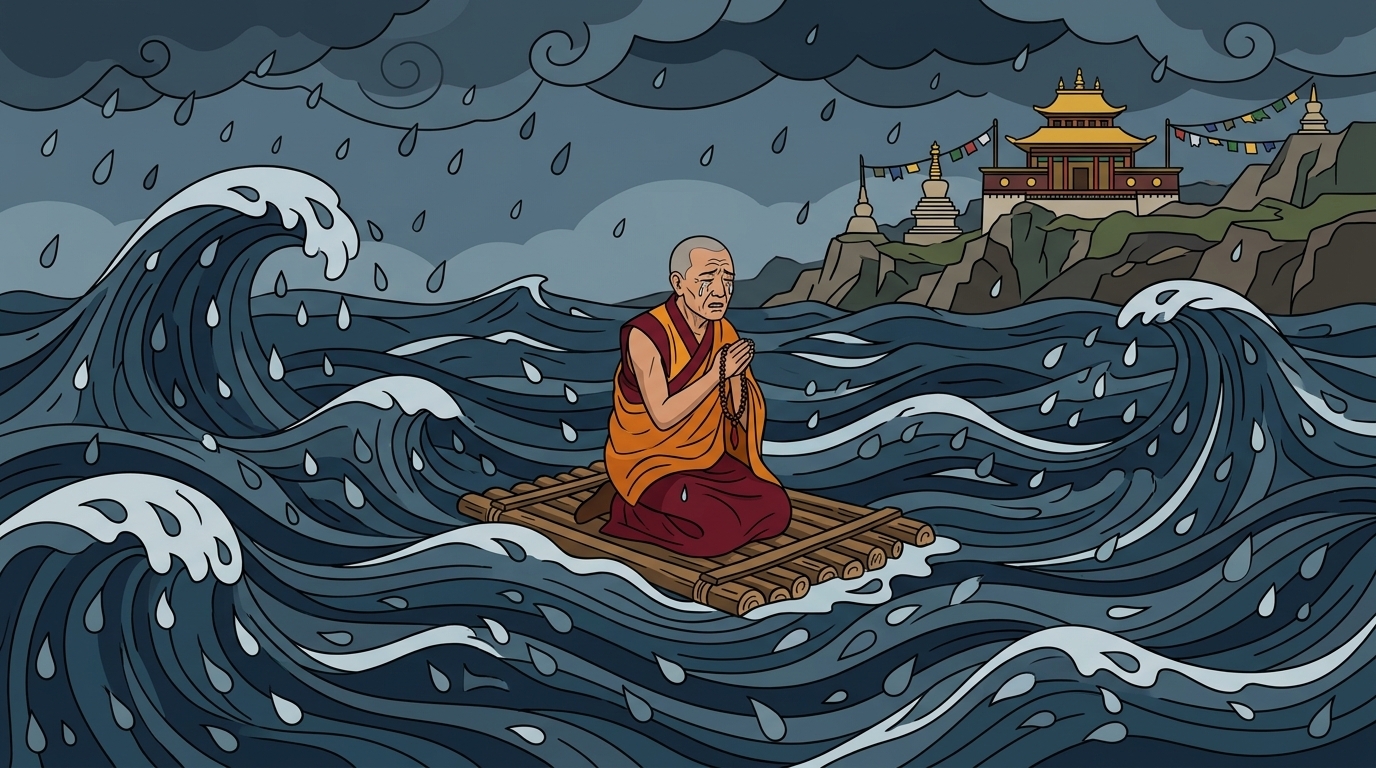
One day, while the Buddha was traveling with a group of monks, they stopped by a vast, beautiful ocean. The waves crashed rhythmically against the shore, stretching out infinitely toward the horizon.
The Buddha pointed to the water and asked his disciples, “Monks, what do you think? Which is greater: the water in the four great oceans, or the tears you have shed while wandering through this long journey of Samsara (the cycle of birth and death), crying and weeping as you were united with what you hated and separated from what you loved?”
The monks, having listened deeply to his teachings on the endless cycles of existence, replied, “Lord, from what we understand of your teachings, the tears we have shed are far greater than the water in the four great oceans.”
“Excellent, monks,” the Buddha said. “Long have you experienced the death of a mother, the death of a father, the death of a brother, a sister, a son, a daughter. Long have you experienced the loss of your wealth and the pain of disease. For an inconceivably long time, you have suffered, and the tears you have shed over these losses are far more vast than the oceans.”
The Lesson
This striking imagery was not meant to depress the monks, but to awaken a profound sense of compassion and a desire for liberation. When we realize the sheer volume of suffering that we—and every other living being—have endured over countless lifetimes, our petty grievances vanish.
If everyone has shed an ocean of tears, how can we look at a stranger with anything but deep empathy? The realization of this universal suffering is the very foundation of Bodhicitta—the compassionate wish to attain enlightenment for the benefit of all beings.
नेपाली अनुवाद
एक दिन, बुद्ध भिक्षुहरूको समूहसँग यात्रा गर्दै गर्दा, उनीहरू एउटा विशाल, सुन्दर समुद्रको किनारमा रोकिए। छालहरू लयबद्ध रूपमा किनारमा ठोक्किरहेका थिए, क्षितिजतिर अनन्त रूपमा फैलिएका थिए।
बुद्धले पानीतिर औंल्याए र आफ्ना चेलाहरूलाई सोधे, “भिक्षुहरू, तिमीहरूलाई के लाग्छ? कुन ठूलो छ: चारवटा ठूला महासागरहरूको पानी, वा तिमीहरूले यो लामो संसार (जन्म र मृत्युको चक्र) को यात्रामा भड्किरहँदा, आफूले घृणा गरेको कुरासँग भेट हुँदा र माया गरेको कुरासँग छुट्टिंदा रुँदै बगाएको आँसु?”
अस्तित्वको अनन्त चक्रको बारेमा उहाँको शिक्षा गहिरिएर सुनेका भिक्षुहरूले जवाफ दिए, “भगवान्, हामीले तपाईंको शिक्षाबाट बुझेअनुसार, हामीले बगाएको आँसु चारवटा ठूला महासागरको पानीभन्दा धेरै ठूलो छ।”
“उत्कृष्ट, भिक्षुहरू,” बुद्धले भने। “तिमीहरूले लामो समयदेखि आमाको मृत्यु, बाबुको मृत्यु, दाजुभाइ, दिदीबहिनी, छोरा, छोरीको मृत्यु भोगेका छौ। लामो समयदेखि तिमीहरूले आफ्नो सम्पत्तिको नोक्सानी र रोगको पीडा भोगेका छौ। अकल्पनीय लामो समयदेखि तिमीहरूले दुःख भोगेका छौ, र यी क्षतिहरूमा तिमीहरूले बगाएको आँसु महासागरहरूभन्दा धेरै विशाल छ।”
शिक्षा
यो मार्मिक कल्पना भिक्षुहरूलाई निराश बनाउन होइन, तर गहिरो करुणा र मुक्तिको चाहना जगाउनको लागि थियो। जब हामीले आफूले—र अरू सबै जीवित प्राणीहरूले—अनगिन्ती जीवनकालहरूमा भोगेका दुःखको मात्रा महसुस गर्छौं, हाम्रा सानातिना गुनासोहरू हराउँछन्।
यदि सबैसँग आँसुको महासागर बगेको छ भने, हामी कसरी अपरिचित व्यक्तिलाई गहिरो समानुभूति बाहेक अरू कुनै कुराले हेर्न सक्छौं? यो विश्वव्यापी दुःखको अनुभूति नै बोधिचित्तको आधार हो - सबै प्राणीहरूको हितको लागि बुद्धत्व प्राप्त गर्ने करुणामय इच्छा।