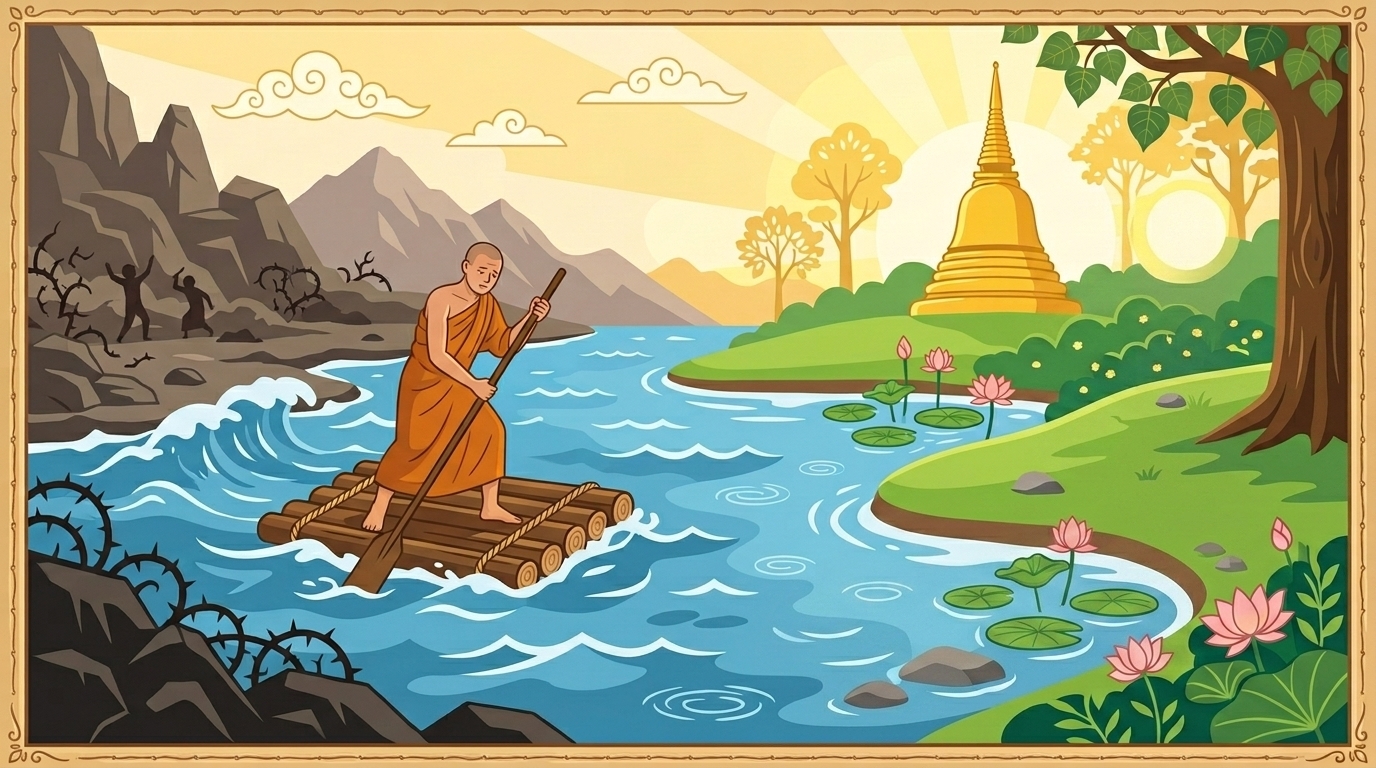
The Buddha once told his monks a story about a traveler on a long journey. The traveler came to a wide, fast-flowing river. The side he was on was dangerous and filled with predators, while the opposite shore appeared peaceful and safe. However, there was no bridge or ferry.
The traveler gathered branches, leaves, and vines, and painstakingly built a sturdy wooden raft. Pushing it into the water, he paddled with all his might using his hands and feet. Finally, exhausted but safe, he reached the far shore.
Standing on the peaceful bank, the traveler looked at the raft. “This raft has been very helpful to me,” he thought. “Without it, I would have perished on the other side. It is so valuable that I should hoist it onto my head and carry it with me for the rest of my journey.”
The Buddha paused and asked the monks, “If the man did this, would he be doing what should be done with the raft?”
The monks replied, “No, Lord. The raft would only burden him.”
“Exactly,” the Buddha said. “The proper thing for the man to do is to realize that the raft has served its purpose. He should leave it on the shore and continue his journey unburdened.”
The Lesson
The Buddha used this parable to explain that even his own teachings (the Dharma) are like a raft. They are tools meant to carry us across the river of suffering to the shore of enlightenment. But once we reach that state of peace, we must not cling to the teachings themselves as absolute dogma.
In our daily lives, this applies to many things: beliefs, habits, or relationships that once protected us or helped us survive difficult times, but which now hold us back. Wisdom is knowing when to build the raft, and knowing when it is time to leave it behind.
नेपाली अनुवाद
बुद्धले एकपटक आफ्ना भिक्षुहरूलाई लामो यात्रामा निस्केका एक यात्रीको कथा सुनाए। यात्री एउटा फराकिलो, छिटो बग्ने नदीमा आइपुग्यो। ऊ भएको तिर खतरनाक र सिकारीहरूले भरिएको थियो, जबकि पारिपट्टि शान्त र सुरक्षित देखिन्थ्यो। तर त्यहाँ कुनै पुल वा डुङ्गा थिएन।
यात्रीले हाँगा, पात, र लहराहरू जम्मा गर्यो, र कडा परिश्रम गरेर एउटा बलियो काठको डुङ्गा (र्याफ्ट) बनायो। यसलाई पानीमा धकेलेर, उसले आफ्नो हात र खुट्टा प्रयोग गरेर सम्पूर्ण शक्ति लगाएर खियायो। अन्ततः, थकित तर सुरक्षित रूपमा, ऊ पारिपट्टि पुग्यो।
शान्त किनारमा उभिएर, यात्रीले डुङ्गालाई हेर्यो। “यो डुङ्गा मेरो लागि धेरै उपयोगी भएको छ,” उसले सोच्यो। “यो नभएको भए, म अर्को तिरै मर्ने थिएँ। यो यति मूल्यवान् छ कि मैले यसलाई आफ्नो टाउकोमा बोकेर मेरो बाँकी यात्रामा सँगै लैजानुपर्छ।”
बुद्ध रोकिए र भिक्षुहरूलाई सोधे, “यदि त्यो मानिसले त्यसो गर्यो भने, के उसले डुङ्गासँग गर्नुपर्ने कुरा गरिरहेको हुनेछ?”
भिक्षुहरूले जवाफ दिए, “छैन भगवान्। डुङ्गाले उसलाई बोझ मात्र थप्नेछ।”
“ठिक त्यस्तै,” बुद्धले भने। “त्यस मानिसले गर्नुपर्ने सही कुरा भनेको डुङ्गाले आफ्नो उद्देश्य पूरा गरिसकेको छ भनेर महसुस गर्नु हो। उसले यसलाई किनारमै छोडेर कुनै बोझ बिना आफ्नो यात्रा जारी राख्नुपर्छ।”
शिक्षा
बुद्धले यो कथालाई आफ्नो शिक्षा (धर्म) पनि एउटा डुङ्गा जस्तै हो भनेर बुझाउन प्रयोग गरे। ती हामीलाई दुःखको नदी तरेर ज्ञानको किनारमा पुर्याउन मद्दत गर्ने उपकरणहरू हुन्। तर एकपटक हामी त्यो शान्तिको अवस्थामा पुगेपछि, हामीले शिक्षाहरूलाई नै पूर्ण सिद्धान्तको रूपमा टाँसिएर बस्नु हुँदैन।
हाम्रो दैनिक जीवनमा, यो धेरै कुराहरूमा लागू हुन्छ: विश्वासहरू, बानीहरू, वा सम्बन्धहरू जसले हामीलाई एकपटक सुरक्षित गरेका थिए वा कठिन समयमा बाँच्न मद्दत गरेका थिए, तर जसले अब हामीलाई पछाडि तानिरहेका छन्। डुङ्गा कहिले बनाउने र कहिले यसलाई छोडेर जाने भनेर जान्नु नै ज्ञान हो।