Sona was a monk who was fiercely determined to achieve enlightenment. Before becoming a monk, he had been a wealthy musician, but he left it all behind to follow the Buddha.
Sona practiced walking meditation with such intense, grueling effort that the soles of his feet blistered and bled. Despite his extreme dedication, he was making no progress and grew deeply frustrated. He thought, “I am trying harder than anyone, yet my mind is not free. Perhaps I should give up and return to my life of luxury.”
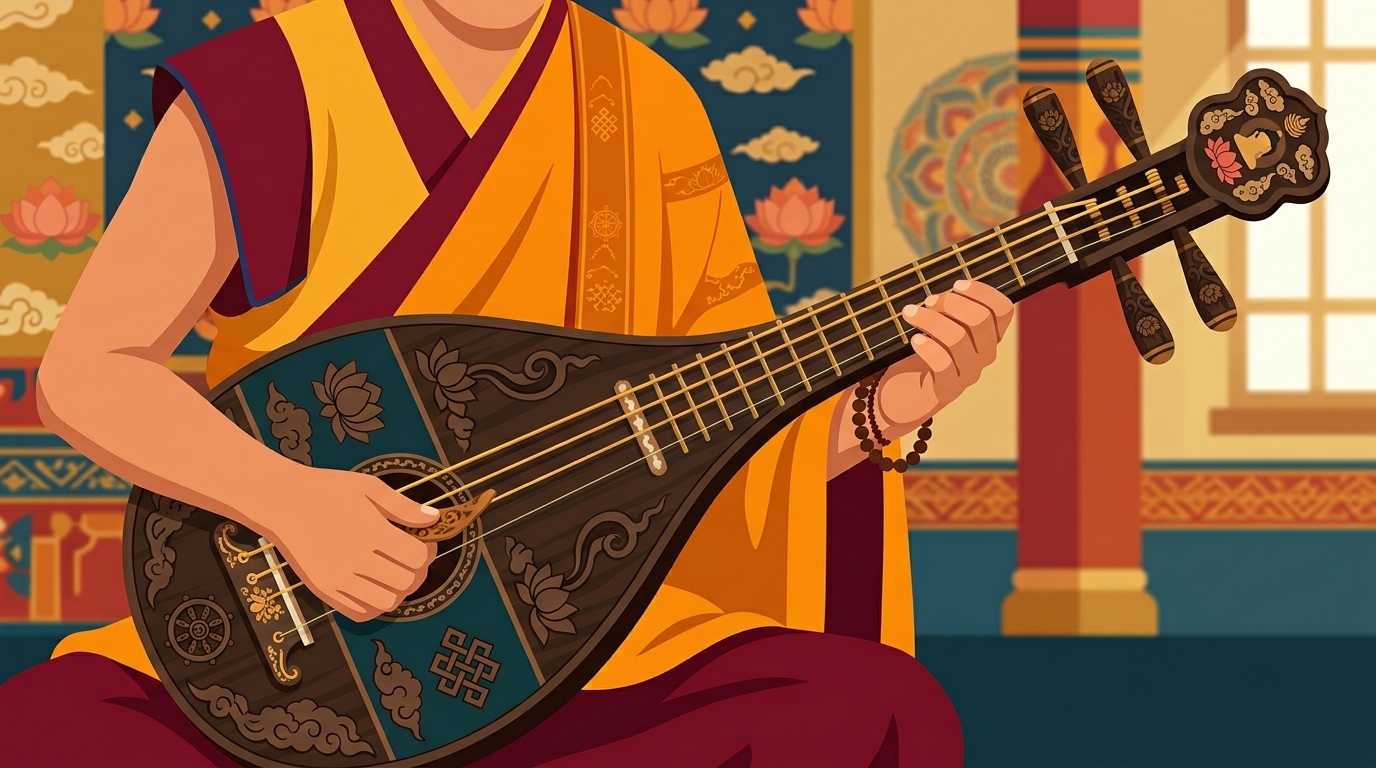
The Buddha, sensing Sona’s despair, approached him and asked, “Sona, when you were a musician, were you skilled at playing the lute?”
“Yes, Lord,” Sona replied.
“Tell me,” the Buddha continued, “when the strings of your lute were tuned too tight, did it produce a beautiful sound?”
“No, Lord. The strings would snap.”
“And when the strings were too loose, did it produce a beautiful sound?”
“No, Lord. It would not play at all.”
“And when the strings were tuned just right—neither too tight nor too loose—how did it sound?”
“It sounded beautiful, Lord, and was perfect for playing.”
The Buddha smiled gently. “In the same way, Sona, if you exert too much effort, it leads to restlessness and frustration. If you exert too little effort, it leads to laziness and apathy. You must tune your practice like a lute. Find the Middle Way between extreme indulgence and extreme asceticism. Only then will your mind find peace.”
Sona adjusted his practice, let go of his desperate striving, and soon after, he attained enlightenment.
The Lesson
The concept of the “Middle Way” is central to Buddhism. Whether in meditation, work, relationships, or diet, extremes rarely lead to lasting happiness. True peace is found in the delicate balance—tuning the strings of our lives so they are neither too tight with stress nor too loose with neglect.
नेपाली अनुवाद
सोना एक भिक्षु थिए जो बुद्धत्व प्राप्त गर्नको लागि दृढ संकल्पित थिए। भिक्षु हुनुअघि, उनी एक धनी संगीतकार थिए, तर बुद्धलाई पछ्याउन उनले ती सबै कुरा छोडे।
सोनाले यति तीव्र, कडा परिश्रमको साथ हिंड्ने ध्यानको अभ्यास गरे कि उनको खुट्टाको पैतालामा फोका उठेर रगत बग्यो। आफ्नो अत्यधिक समर्पणको बावजुद, उनले कुनै प्रगति गरिरहेका थिएनन् र गहिरो निराशामा पुगे। उनले सोचे, “म सबैभन्दा बढी प्रयास गरिरहेको छु, तैपनि मेरो मन स्वतन्त्र छैन। सायद मैले हार मानेर मेरो विलासी जीवनमै फर्कनुपर्छ।”
बुद्धले सोनाको निराशा महसुस गर्दै उनको नजिक गए र सोधे, “सोना, जब तिमी संगीतकार थियौ, के तिमी वीणा बजाउनमा सिपालु थियौ?”
“हजुर भगवान्,” सोनाले जवाफ दिए।
“मलाई भन त,” बुद्धले भन्दै गए, “जब तिम्रो वीणाका तारहरू धेरै कसिन्थे, के त्यसले सुन्दर आवाज निकाल्थ्यो?”
“हजुर छैन भगवान्। तारहरू चुँडिन्थे।”
“र जब तारहरू धेरै खुकुलो हुन्थे, के त्यसले सुन्दर आवाज निकाल्थ्यो?”
“हजुर छैन भगवान्। यो बज्दै बज्दैनथ्यो।”
“र जब तारहरू ठीकसँग मिलाइएको हुन्थ्यो - न धेरै कसिलो न धेरै खुकुलो - तब कस्तो सुनिन्थ्यो?”
“यो सुन्दर सुनिन्थ्यो, भगवान्, र बजाउनको लागि पूर्ण हुन्थ्यो।”
बुद्ध हल्का मुस्कुराए। “त्यसैगरी, सोना, यदि तिमीले धेरै प्रयास गर्यौ भने, यसले अशान्ति र निराशा निम्त्याउँछ। यदि तिमीले धेरै कम प्रयास गर्यौ भने, यसले अल्छीपन र उदासीनता निम्त्याउँछ। तिमीले आफ्नो अभ्यासलाई वीणा जस्तै ट्युन गर्नुपर्छ। चरम भोग र चरम तपस्या बीचको मध्य मार्ग खोज। तब मात्र तिम्रो दिमागले शान्ति पाउनेछ।”
सोनाले आफ्नो अभ्यासलाई समायोजन गरे, आफ्नो हताश प्रयासलाई छोडिदिए, र केही समयपछि उनले बुद्धत्व प्राप्त गरे।
शिक्षा
“मध्य मार्ग” को अवधारणा बुद्ध धर्मको केन्द्रबिन्दु हो। चाहे ध्यानमा होस्, काममा होस्, सम्बन्धमा होस्, वा खानामा होस्, चरम सीमाले विरलै दिगो खुशी ल्याउँछ। साँचो शान्ति नाजुक सन्तुलनमा पाइन्छ - हाम्रो जीवनका तारहरूलाई ट्युन गर्ने ताकि ती तनावले धेरै कसिलो नहुन् र बेवास्ताले धेरै खुकुलो नहुन्।