The Parable of the Two Arrows
दुई तीरको कथा
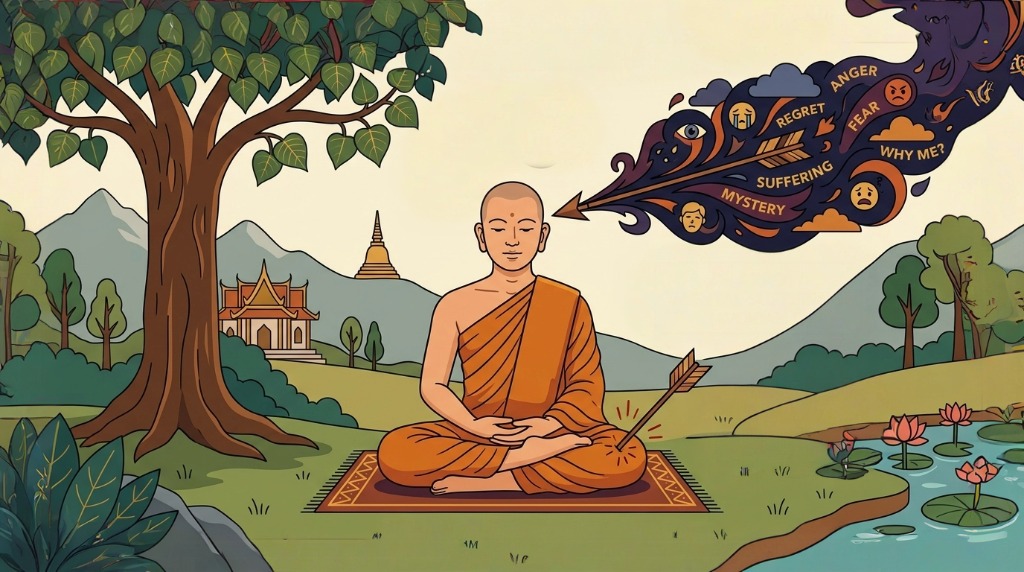
The Buddha once asked his monks, “If a person is struck by an arrow, is it painful?”
The monks replied, “Yes, Lord. It is painful.”
The Buddha then asked, “If the person is struck by a second arrow in exactly the same place, is it even more painful?”
“Yes, Lord. It would be much more painful.”
“Exactly,” said the Buddha. “In life, we cannot always avoid the first arrow. The first arrow represents the inevitable pain of existence—physical illness, the loss of a loved one, a sudden accident, or simply the daily difficulties of life. This pain is natural and unavoidable.
“However, when we experience this pain, we often react with anger, fear, resentment, or despair. We think, ‘Why is this happening to me?’ or ‘This isn’t fair!’ or ‘I can’t handle this!’
“This reaction is the second arrow. Unlike the first arrow, which was shot by circumstances, the second arrow is shot by ourselves. We compound our pain by resisting it, turning natural discomfort into deep suffering.”
The Buddha concluded, “The wise person is struck by the first arrow but does not shoot the second arrow. They experience pain, but they do not add suffering to it.”
Applying the Teaching
When faced with difficulty, we can practice mindfulness to recognize the first arrow without immediately firing the second. By accepting the reality of the pain without adding layers of emotional resistance, we can deal with challenges far more gracefully.
नेपाली अनुवाद
बुद्धले एकपटक आफ्ना भिक्षुहरूलाई सोधे, “यदि कुनै व्यक्तिलाई तीर लाग्यो भने, के त्यो पीडादायी हुन्छ?”
भिक्षुहरूले जवाफ दिए, “हजुर भगवान्। यो पीडादायी हुन्छ।”
त्यसपछि बुद्धले सोधे, “यदि त्यो व्यक्तिलाई ठीक त्यही ठाउँमा दोस्रो तीर लाग्यो भने, के त्यो अझ बढी पीडादायी हुन्छ?”
“हजुर भगवान्। त्यो धेरै गुणा बढी पीडादायी हुन्छ।”
“ठिक त्यस्तै,” बुद्धले भने। “जीवनमा, हामी सधैं पहिलो तीरलाई बेवास्ता गर्न वा हटाउन सक्दैनौं। पहिलो तीरले अस्तित्वको अपरिहार्य पीडालाई जनाउँछ - शारीरिक रोग, प्रियजनको क्षति, अचानक दुर्घटना, वा केवल जीवनका दैनिक कठिनाइहरू। यो पीडा स्वाभाविक र अपरिहार्य छ।
“यद्यपि, जब हामी यो पीडा अनुभव गर्छौं, हामी अक्सर क्रोध, डर, असन्तुष्टि, वा निराशाको साथ प्रतिक्रिया गर्छौं। हामी सोच्छौं, ‘किन मलाई यस्तो भइरहेको छ?’ वा ‘यो अन्यायपूर्ण छ!’ वा ‘म यो सामना गर्न सक्दिनँ!’
“यो प्रतिक्रिया नै दोस्रो तीर हो। पहिलो तीर परिस्थितिले हानेको हुन्छ, तर यो दोस्रो तीर हामी आफैंले हान्छौं। हामी त्यसको विरोध गरेर हाम्रो पीडा बढाउँछौं, प्राकृतिक असहजतालाई गहिरो दुःखमा परिणत गर्छौं।”
बुद्धले निष्कर्ष निकाले, “ज्ञानी व्यक्तिलाई पहिलो तीर लाग्छ तर उसले दोस्रो तीर हान्दैन। उनीहरूले पीडा अनुभव गर्छन्, तर त्यसमा दुःख थप्दैनन्।”
शिक्षाको प्रयोग
जब कठिनाइको सामना गर्नुपर्छ, हामी तुरुन्तै दोस्रो तीर नहानी पहिलो तीर पहिचान गर्न माइन्डफुलनेस (सचेतना) को अभ्यास गर्न सक्छौं। भावनात्मक प्रतिरोधको पत्रहरू नथपीकन पीडाको वास्तविकतालाई स्वीकार गरेर, हामी चुनौतीहरूलाई धेरै सहज रूपमा सामना गर्न सक्छौं।